Hair Salon Industry Trends 2024: The Expert Business Guide
Major Trends in the Hairdressing Sector: A Strategic Guide for Professionals
The hair industry is undergoing a period of unprecedented transformation. In 2024, the global hair care market is estimated at over $90 billion, with a projected annual growth of 4.5%. For salon owners, this dynamic requires rethinking not only cutting techniques but also the entire business model and customer experience.
The sector faces structural challenges: rising energy costs, skilled labor shortages, and evolving consumer expectations toward more personalization and ethics. To remain competitive, understanding trends is no longer enough; you must know how to integrate them profitably within your establishment.
1. The Revolution of Ultra-Targeted Personalization
The days of standardized cut catalogs are over. Today, 75% of customers say they are willing to pay more for personalized service. This trend is manifested by the rise of AI-assisted hair diagnostics and morphology analysis.
The Importance of In-depth Diagnosis
A diagnosis should no longer last two minutes at the shampoo bowl. It is a full consulting act. Successful salons are those that dedicate 10 to 15 minutes to analyzing the scalp, the chemical history of the hair, and the client's lifestyle habits. This not only builds loyalty but also justifies higher rates for specific treatments.
Customization of Formulas
We are seeing the emergence of mixing bars where colorists create custom repigmenting treatments in front of the client. This transparency reinforces the perception of expertise. By offering unique solutions, you make your service incomparable with mass-market products, thus protecting your margins on resale.
2. Sustainability as a Growth Driver
Sustainability is no longer a marketing option; it is an economic requirement. According to the latest consumer studies, 60% of Millennials prefer businesses committed to an ecological approach. For a salon, this translates into real savings on fixed costs.
Water and Energy Management
Installing high-performance aerators on sinks can reduce water consumption by 40 to 60%. Coupled with the use of biodegradable towels or a low-energy laundry system, the impact on the monthly bill is immediate. This is where a good hair salon software can help you track your performance indicators and operational costs to validate your investments.
Recycling and Natural Products
Recycling hair for ocean cleanup or thermal insulation is becoming a standard. Meanwhile, demand for plant-based colorings and sulfate-free, paraben-free products is exploding. Offering a "clean beauty" range attracts a high-purchasing-power clientele concerned about their health and the environment.
3. Digitalization and Customer Journey Optimization
Digital transformation is the pillar of survival for independent salons against large franchises. The fluidity of the customer journey begins long before entering the salon. 82% of hair salon appointments are now made via a mobile device outside of opening hours.
The End of the Telephone Switchboard
Online booking systems reduce no-shows by 30% through automated SMS reminders. This also frees up valuable time for your staff, who can focus on physical reception rather than managing incessant calls. To optimize your human resources, adopting a staff management solution facilitates rotation planning and individual productivity tracking.
4. Holistic Well-being: The Salon as a Sanctuary
Hairstyling is now integrated into a more global approach to mental health and relaxation. The client no longer comes just for a cut, but for a sensory break. This evolution allows transforming a technical service into an affordable luxury experience.
Space Layout and Atmosphere
Lighting, playlist, and even the salon's scent (aromatherapy) are studied to lower clients' cortisol levels. Massaging washbasins and more intimate styling areas are replacing long rows of impersonal mirrors. Creating "quiet zones" for those who wish to telework or read in silence is a growing demand.
5. HR Challenges and Management: Valuing Talent
The shortage of hairdressers is the main brake on the sector's growth. To attract and retain talent, managers must evolve their management style.
The 4-Day Work Week and Flexibility
More and more salons are experimenting with a 4-day week to improve work-life balance. Although complex to organize, this measure drastically reduces turnover. Continuous training is also a major loyalty lever: a staff member who learns new techniques is a motivated and more efficient employee in resale.
6. Data Analysis: Managing by the Numbers
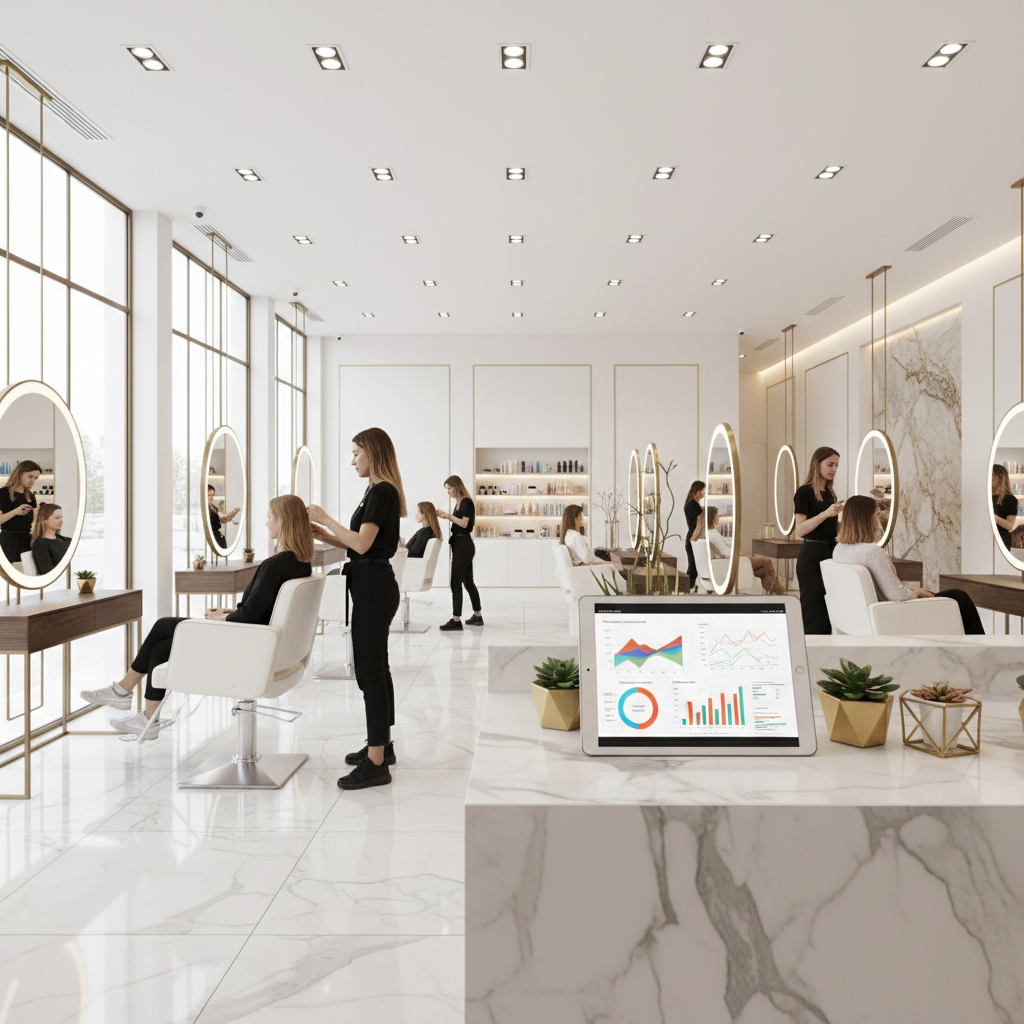
Intuition is no longer enough to run a profitable salon. Data is the modern manager's best ally. Understanding average basket, retention rate, and customer acquisition cost is vital.
Key Performance Indicators (KPI)
You must monitor three main indicators:
Conclusion and Outlook
The hair sector is at the dawn of a golden age for those who can combine excellent craftsmanship with modern business management. The future belongs to salons that put humans at the center while relying on technology to simplify invisible processes. To support this transition and optimize the overall performance of your establishment, it is now essential to discover solutions adapted to the specific needs of beauty professions.
Ready to transform your business?
Discover how Madyis can help you grow your business.
Discover Madyis