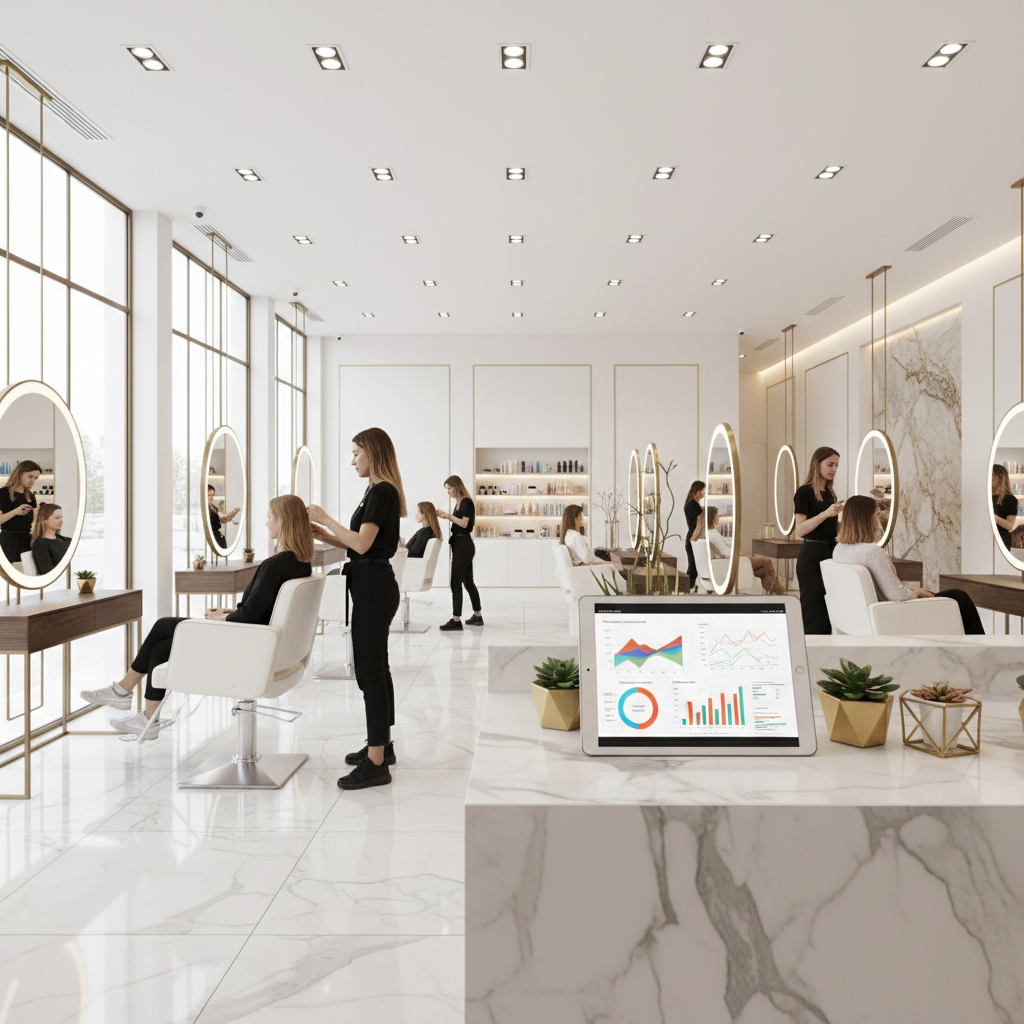
Hair Salon Management: 7 Pro Tips to Boost Profitability
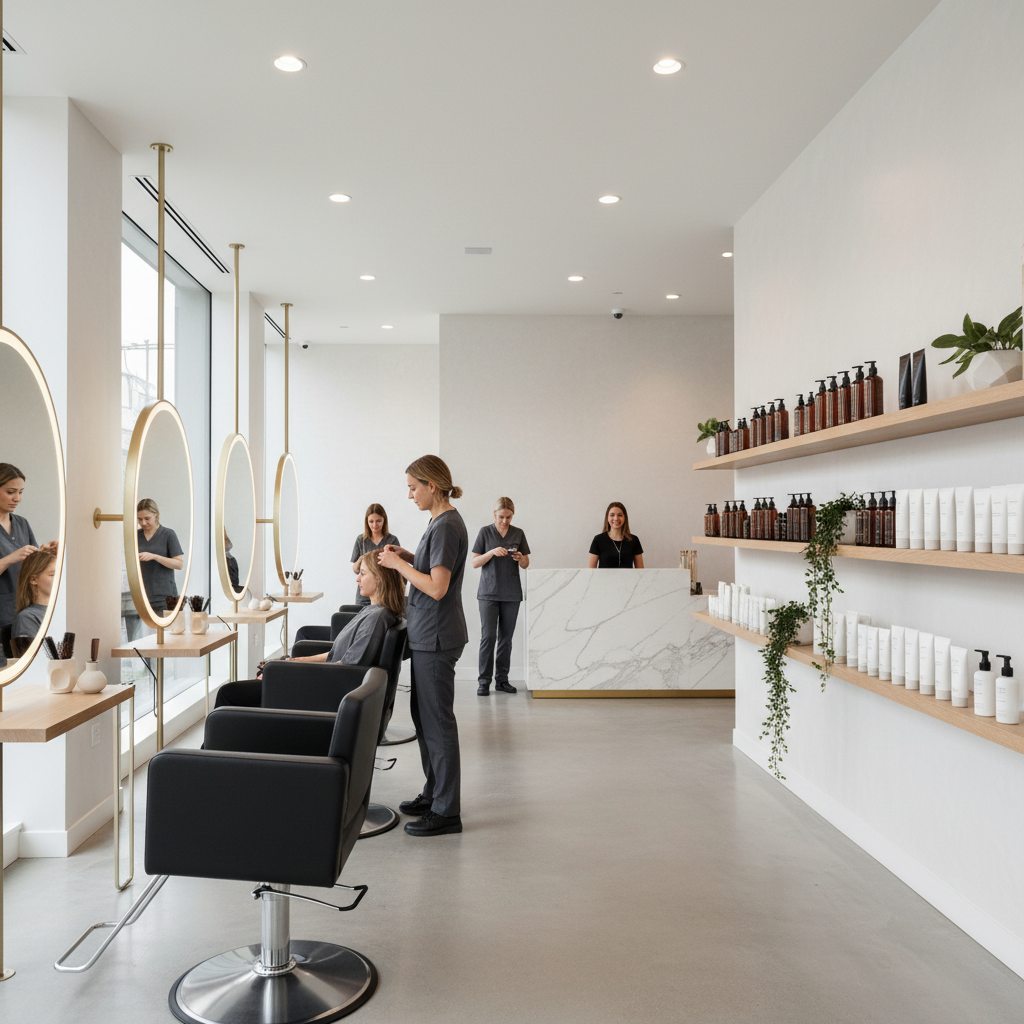
Hair Salon Management: The Expert Guide to Optimizing Profitability
The hairdressing industry is a major economic force, but it faces increasing competition. Today, technical talent alone is not enough; business management mastery has become the central pillar of a salon's longevity.
According to recent industry studies, average salon attendance has slightly decreased, while the average basket tends to stagnate if no additional sales strategy is in place. In this context, how can a traditional salon be transformed into a highly profitable business? This guide details the actionable levers to structure your activity and offer a memorable customer experience.
1. Mastering Key Performance Indicators (KPIs)
The first step to improving your establishment's financial health is rigorous data analysis. Too many stylists lead their activity by "instinct," which can mask significant structural losses.
Average Basket and Retail Rate
The average basket is the total sales divided by the number of customers. Increasing the average basket by $5 per customer can generate thousands of dollars in additional profit by the end of the year without increasing your fixed costs. To achieve this, selling care products is crucial. In high-performing salons, the retail rate reaches 20%.
Productivity per Employee
Calculating the revenue generated by each chair helps identify training needs or organizational issues. An employee should ideally generate revenue representing 3 to 3.5 times their loaded salary to ensure the profitability of the position. If this ratio is not reached, it is time to review the schedule or invest in a hair salon software to optimize slot occupancy.
2. Optimizing the Customer Experience in the Digital Age
The customer journey no longer begins at the salon door, but on a smartphone screen. 75% of customers say they prefer to book their services outside of opening hours.
The Fluidity of the Booking Process
Immediacy has become the norm. Integrating a booking button on your social networks and website reduces friction. Moreover, this frees up time for your employees who are no longer interrupted by the phone in the middle of a cut.
Personalization through Customer Files
A well-filled customer file is your most valuable asset. Note habits, allergies, drink preferences, and birthdays. Sending a personalized offer or an automatic reminder increases the return rate considerably. Loyalty costs 5 to 7 times less than acquiring a new customer.
3. Developing a Powerful Local Marketing Strategy
Marketing for a hair salon must be surgical and local. There is no point in targeting the whole country if your catchment area is limited to a 10-mile radius.
The Importance of Google Business Profile
A profile optimized with high-quality photos of your work and positive customer reviews is the best growth lever. Salons with more than 50 reviews and a rating higher than 4.5/5 see their visibility increase by 60% in local search results.
Social Media as a Living Catalog
Instagram and TikTok have become the new fashion magazines. Post short videos (Reels) showing behind-the-scenes, balayage techniques, or home maintenance tips. This humanizes your brand.
4. Management and Team Motivation
Turnover is one of the biggest challenges in the sector. Recruiting and training a new employee is expensive. Modern management relies on recognition.
Implementing Goal-Based Bonuses
Instead of fixed bonuses, favor commissions on product retail or exceeding a weekly revenue target. This encourages stylists to become true beauty advisors. Good staff management involves transparency of results.
Continuous Training
Hair trends evolve very quickly. Offering regular training to your employees is not an expense, it's an investment. A stylist who masters the latest techniques feels valued and offers more expensive services.
5. Stock Management and Cost Reduction
Product waste is a silent scourge. In some salons, up to 15% of hair color ends up in the sink due to a lack of precision during preparation.
Real-Time Inventory
Use precision scales for mixtures and keep a rigorous inventory. Stock that is too large ties up your cash flow, while a stockout on a key product causes you to miss sales.
Negotiating with Suppliers
Don't stay stuck on your historical contracts. Regularly compare the prices of consumables. Sometimes, grouping purchases or changing ranges can save 2-3% of operational margin.
6. Space Layout to Maximize Revenue
Your salon's layout directly influences your customers' purchasing behavior. Merchandising is not just for supermarkets.
Retail Sales Area
Retail products should not be behind the counter, but within the customer's reach. A customer who can touch and smell a product is 40% more likely to buy it.
Acoustic and Visual Comfort
A noisy salon does not encourage relaxation. Invest in absorbent materials and take care of the playlist. A relaxed customer stays longer and is more likely to accept additional treatments.
7. Preparing for the Future: Digitalization and Sustainability
The salon of tomorrow will be connected and eco-responsible. Customers are increasingly sensitive to ecological commitments.
Complete Digital Transition
Digitalization is not limited to social networks. It concerns the entire internal organization, from simplified accounting to schedule management. Adopting modern tools allows you to focus on the essential: customer satisfaction.
In conclusion, the success of a hair salon in 2024 relies on a subtle balance between technical excellence and managerial rigor. To support this transformation, it is essential to discover adapted solutions that simplify your daily life as a business owner on the Madyis homepage.
Ready to transform your business?
Discover how Madyis can help you grow your business.
Discover Madyis