Beauty Industry Trends: 2024 Strategic Guide for Salons
Beauty Industry Trends: Strategic Guide for Salons and Spas
The beauty and wellness industry is undergoing an unprecedented transformation. In 2023, the global beauty market reached an estimated valuation of over $500 billion, with a projected annual growth of 6% until 2030. For salon owners, understanding these shifts is no longer optional—it’s a vital necessity for survival.
1. The Rise of Skin-Tech and Deep Beauty
Modern consumers are no longer satisfied with surface-level treatments. We are seeing a growing demand for measurable results and a scientific approach to skin. Technology is moving into the treatment room to provide ultra-precise diagnostics.
AI-Powered Skin Analysis
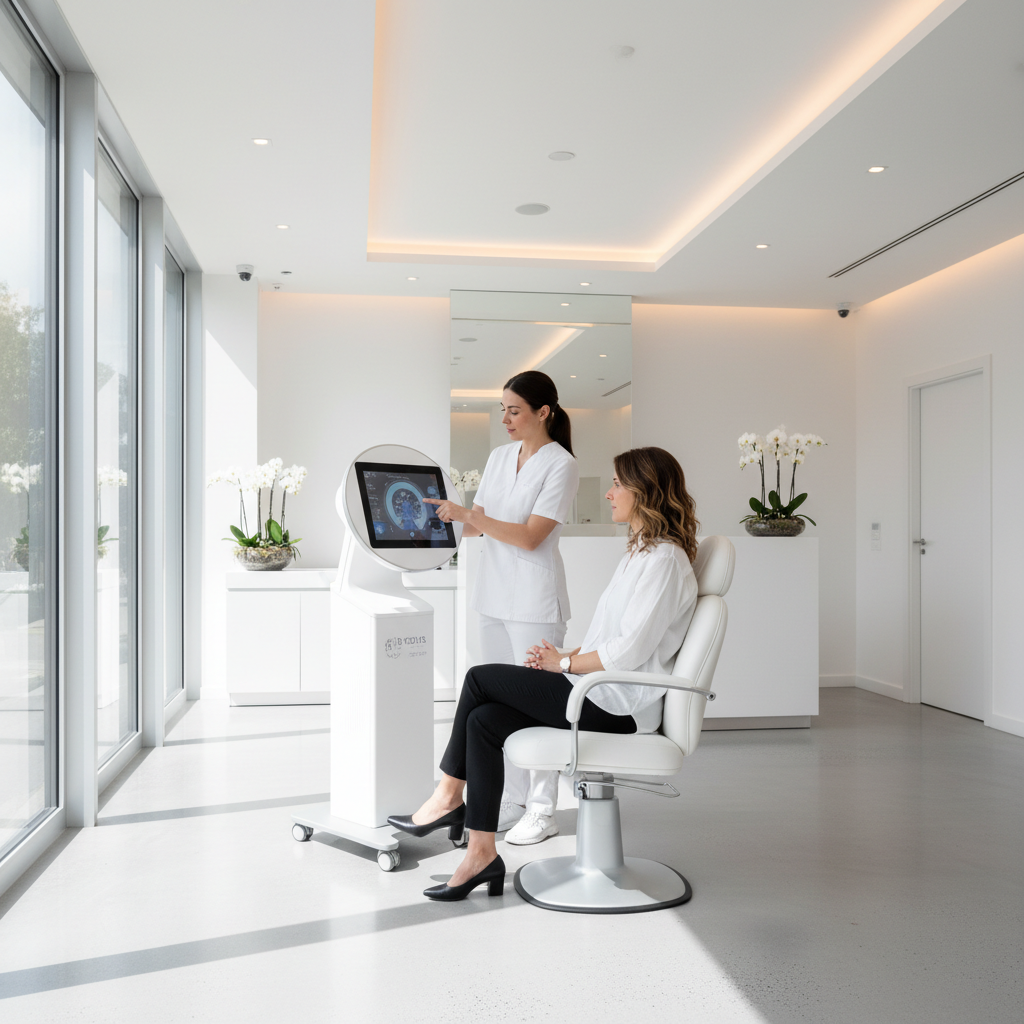
Artificial intelligence now allows for deep analysis of the dermis. These tools measure hydration levels, wrinkle depth, and pigmentation. By integrating these technologies, an institute moves from being a service provider to an expert consultant.
LED Therapy and Microcurrents
LED (Light Emitting Diode) devices and radiofrequency technologies are becoming industry standards. According to recent studies, demand for non-invasive treatments has increased by 35% in two years. Investing in a professional logiciel pour institut de beauté helps track client progress and optimize high-tech treatment protocols.
2. Eco-Responsibility: From Marketing to Reality
Green Beauty is no longer a niche trend; it’s a market imperative. Over 70% of consumers claim to prefer establishments that demonstrate a concrete environmental approach.
Reducing Carbon Footprint in the Salon
This involves rigorous waste management, choosing partner brands with recyclable packaging, and reducing water consumption. Professionals are increasingly adopting biodegradable towels or high-performance filtration systems.
Clean Beauty and Ingredient Transparency
Clients are scrutinizing labels. Formulas without endocrine disruptors, silicones, or parabens are preferred. It is advisable to train your teams in INCI (International Nomenclature of Cosmetic Ingredients) analysis to answer the sophisticated questions of an increasingly informed clientele.
3. Hyper-Personalization: Bespoke Care
The era of standardized treatments is over. Every client expects a unique experience tailored to their lifestyle, stress levels, and environment.
Creating Dynamic Protocols
Instead of offering a fixed treatment menu, leading salons offer "time bubbles." The client books a duration (60, 90, or 120 minutes), and the treatment is built in real-time after an initial diagnosis. This approach highlights the aesthetician's expertise and justifies higher prices.
Digitalized Post-Treatment Follow-up
Support no longer stops at the salon door. Sending personalized routines via email or an app strengthens the trust bond. To effectively manage these relationships and automate reminders, using a application de réservation client becomes an essential loyalty lever.
4. Holistic Wellness: Inner and Outer Beauty
The line between mental health, nutrition, and aesthetics is blurring. The concept of global "Wellness" dominates the market.
Nutricosmetics and Supplements
Integrating dietary supplements (collagen, probiotics, vitamins) into retail can increase the average basket by 15-20%. "In & Out" cures (a cabin treatment coupled with an oral cure) offer much more convincing long-term results.
Stress Management and Mindfulness
Introducing breathing techniques or sensory scalp massages addresses growing psychological distress. A salon that offers a mental escape in a hyper-connected world becomes an indispensable health destination.
5. Digitalization of the Customer Journey
The customer experience starts on Google and Instagram long before the first physical contact. In many regions, 65% of beauty appointments are now made outside of salon opening hours.
Omnichannel Presence
Your salon must be bookable everywhere: Google My Business, social media, your website. Seamless booking is the top choice criterion for Gen Z and Millennials. A clear interface and secure online payment reduce the "no-show" rate by nearly 40%.
6. Optimizing Business Management
Making a salon profitable requires a detailed analysis of key performance indicators (KPIs). Inventory management, cabin cost per minute, and occupancy rate are vital metrics.
Profitability and Inventory
Dormant stock represents a direct loss of cash flow. Experts recommend not exceeding 5% of annual turnover in stock value. It is crucial to implement rotating inventories and analyze the turnover of retail products compared to professional products.
Conclusion
The beauty sector in 2024 is technological, ethical, and deeply human. Successful establishments will be those that combine technical expertise with a holistic approach to well-being, while simplifying the customer journey through digital tools. To stay competitive, it is essential to explore tailored solutions to optimize your business operations.
Ready to transform your business?
Discover how Madyis can help you grow your business.
Discover Madyis