2024 Trends: The Future of Aesthetic Clinics

Major Trends in the Aesthetic Clinic Sector in 2024
The medical and surgical aesthetics sector is undergoing an unprecedented period of mutation. While the global medical aesthetics market was valued at approximately $15.4 billion in 2023, projections indicate a compound annual growth rate (CAGR) of over 10% through 2030. This dynamic is driven by the democratization of care, the rise of non-invasive treatments, and increased patient demand for natural results and safety.
For managers and practitioners, understanding these changes is no longer an option but a strategic necessity to maintain their clinic's competitiveness. The era when word-of-mouth was enough is over; a clinic's performance now relies on the balance between high-end medical expertise, ultra-personalized patient experience, and digital optimization.
1. The Rise of Non-Invasive Treatments and Preventative Beauty
One of the most striking trends is the massive shift of patients toward non-surgical procedures. According to recent ISAPS (International Society of Aesthetic Plastic Surgery) statistics, non-invasive procedures jumped by 22% in one year. This trend is driven by Gen Z and Millennials who are adopting a "preventative" rather than corrective approach.
The Growth of Baby Botox and Skinboosters
Patients now seek to prevent signs of aging before they even appear. "Baby Botox," consisting of injecting low doses of botulinum toxin for an imperceptible result, is becoming the norm. Simultaneously, skinboosters and mesotherapy are gaining ground to improve skin quality deeply without changing facial volumes. Integrating a solution for institut de beauté allows for precise tracking of these regular treatment protocols.
Non-Surgical Body Contouring Technologies
Body contouring is undergoing a revolution thanks to next-generation cryolipolysis, high-intensity electromagnetic waves (HIFEM), and radiofrequency. These technologies allow for treating localized fat and toning muscles without social downtime. Clinics investing in these technical platforms see their profitability per square meter increase significantly, as these treatments can often be delegated to qualified assistants under medical supervision.
2. Personalization through Artificial Intelligence and 3D Diagnosis
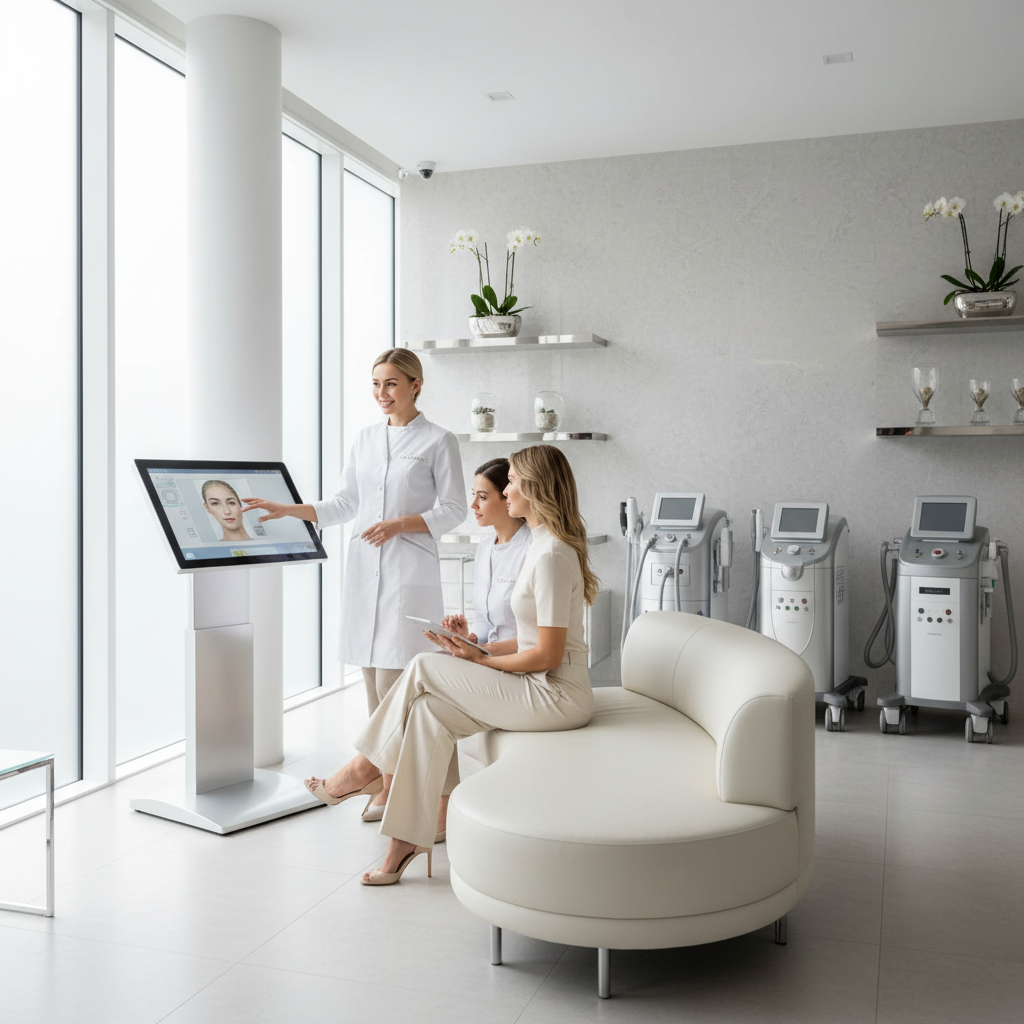
The modern patient no longer wants standardized treatment. They demand a unique care plan. The use of 3D scanners and AI-assisted skin diagnostic tools is becoming a consultation standard. These tools allow for visualizing sun damage, wrinkle depth, or skin vascularization before starting treatment.
Predictive Analysis for Guaranteed Results
Thanks to AI, practitioners can now simulate post-operative or post-injection results with surgical precision. This reduces patient anxiety and aligns expectations with medical reality. By integrating a logiciel de gestion pour salon or clinic, professionals can also analyze historical data to recommend the most suitable home skincare products based on the patient's genetic and environmental profile.
3. Aesthetic for Men: A Booming Market
Long left on the sidelines, male clientele now represents about 15 to 20% of the turnover of leading aesthetic clinics. However, men's expectations differ drastically from women's. They seek discretion, speed, and results that preserve their masculine features. Hair transplants (FUE), double chin treatments, and jawline contouring are the most frequent requests.
4. Longevity and Regenerative Medicine
The line between aesthetics and global health is blurring. We no longer just talk about looking younger, but "aging well." Regenerative medicine, using the body's own resources (PRP, Exosomes), is at the heart of this trend. Clinics are also integrating nutrition and nutraceuticals to treat systemic inflammation, often responsible for premature skin aging.
5. Ethical Marketing and Digital Transparency
With social media, the trend is now "Real Face." Clinics must adopt transparent and ethical communication. Publishing real case studies with unretouched photos and explaining potential risks has become the best conversion lever. Reputation management and post-appointment satisfaction surveys are essential to catch dissatisfaction before it becomes public.
Conclusion: Toward Clinic 4.0
The success of a modern aesthetic clinic relies on merging medical excellence with cutting-edge technology. Digitalizing administrative processes and customer relations is essential to sustain activity while focusing on the core business: the beauty and well-being of patients.
Ready to transform your business?
Discover how Madyis can help you grow your business.
Discover Madyis