Barbershop Industry Trends: The Ultimate Business Guide
Barbershop Industry Trends: Evolving Towards a Premium Customer Experience
The men's grooming sector is undergoing an unprecedented transformation. Once considered a simple convenience service, a visit to the barber has become a true sociological wellness ritual. In 2024, the global male grooming market is expected to exceed $80 billion, with sustained annual growth. This dynamic is no longer based solely on the classic haircut, but on a diversified range of services and a hyper-personalized customer experience.
Historically, the barber was the social heart of the neighborhood. Today, this function is being reborn in a modernized form. Professionals who succeed are those who combine traditional craftsmanship with new demands for comfort and technology. To stay competitive, it is imperative to understand the levers of this growth and adapt your business model to the new expectations of male consumers.
1. The Rise of Hybrid Services and Facial Care
The first major trend lies in the diversification of the service catalog. Modern clients no longer come just for a 15-minute beard trim. They are looking for a break in their day. Establishments that integrate facial care protocols (moisturizing treatments, charcoal masks, hot eucalyptus oil towels) see their average basket increase by 25 to 40%.
The Experience of Revisited Traditional Shaving
Traditional shaving remains a pillar, but it must be enhanced. The use of organic, paraben-free products meets a growing demand for transparency regarding ingredients. Men are increasingly educated about their skin health. Integrating a quick skin analysis before shaving allows for recommending specific retail products, transforming a simple service into a lucrative advisory sale.
Integration of Dermopigmentation and Advanced Hair Care
Beyond clippers, barbershops are starting to offer solutions for thinning hair or gray hair maintenance. Male coloring is no longer a taboo, provided it is subtle. Offering a "gray camouflage" in 10 minutes at the shampoo bowl is a major business opportunity to retain an older clientele with high purchasing power.
2. Interior Design and Strong Visual Identity
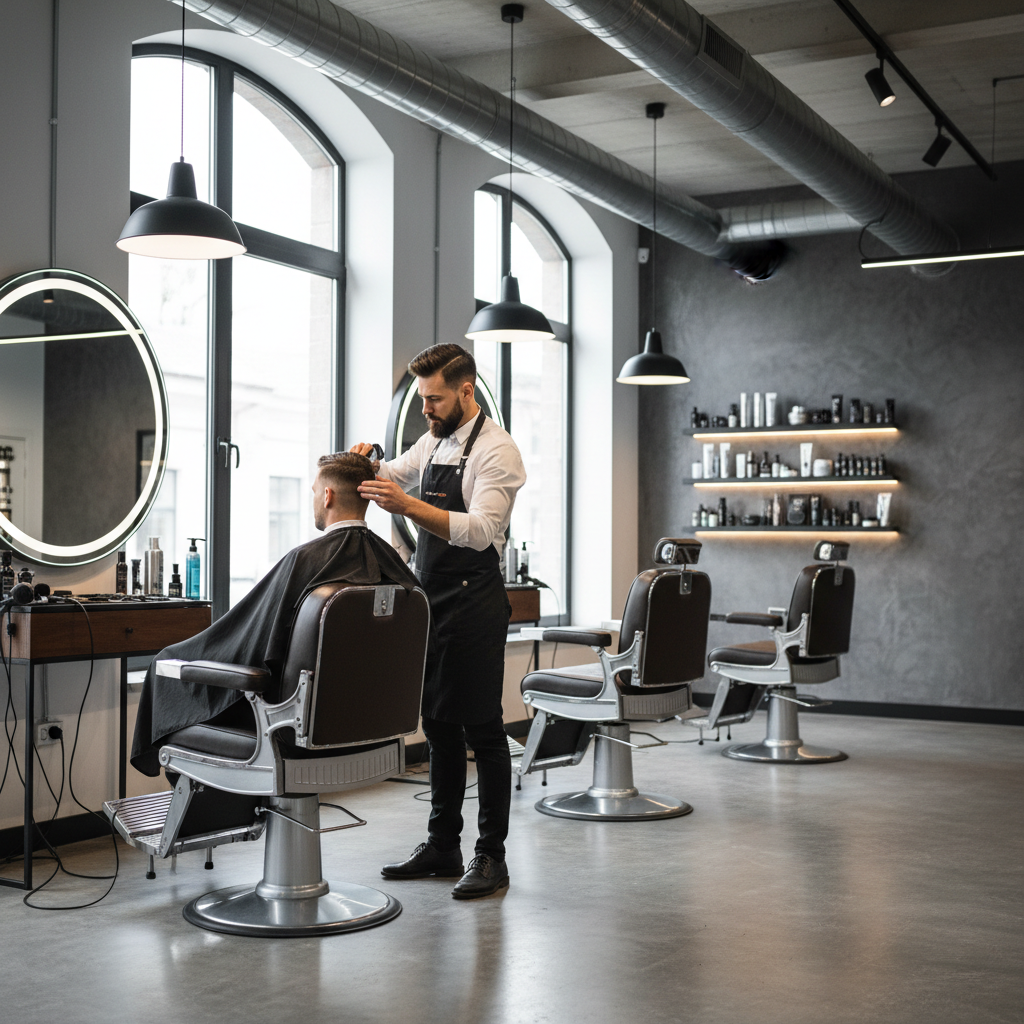
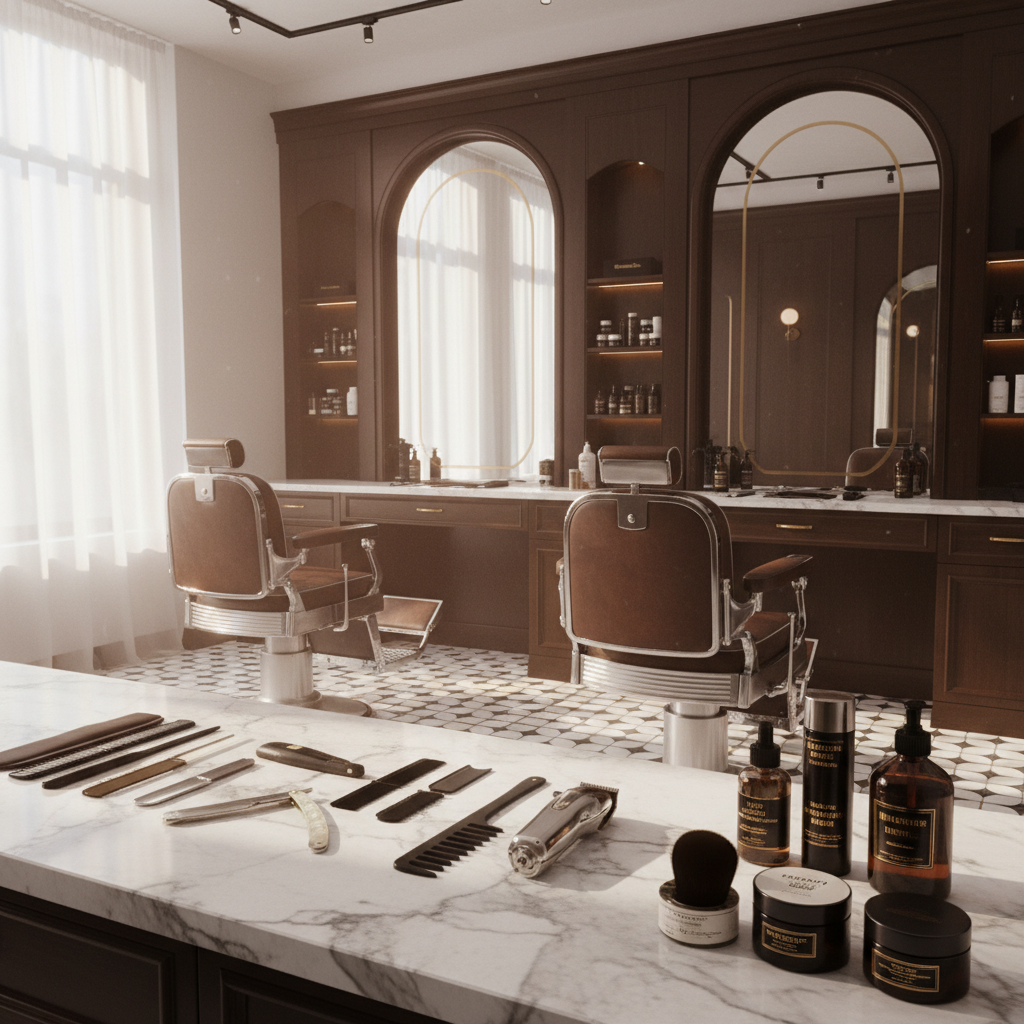
The aesthetics of the point of sale is the primary communication vehicle. The current trend is moving away from the over-standardized "wood and metal" industrial style towards more unique atmospheres: Art Deco, futuristic minimalism, or cozy English club. The space must not only be functional; it must be "Instagrammable."
Creating Differentiated Comfort Zones
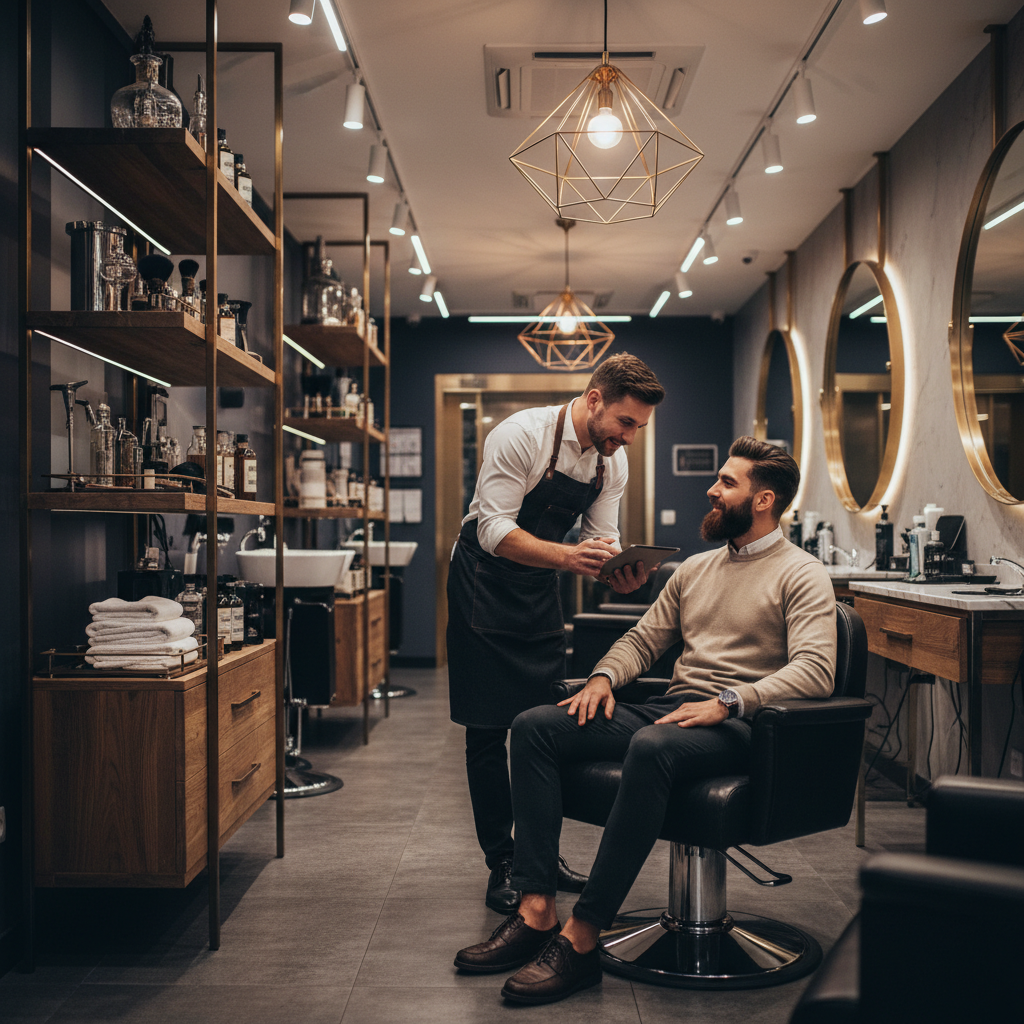
It is advisable to set up a lounge area where the client can enjoy a specialty coffee or a premium beverage. This wait should not be endured but chosen. The more the client feels at home, the more likely they are to return regularly. Loyalty is the sinew of war, and it comes through the feeling of belonging to a community.
Lighting: A Technical and Marketing Tool
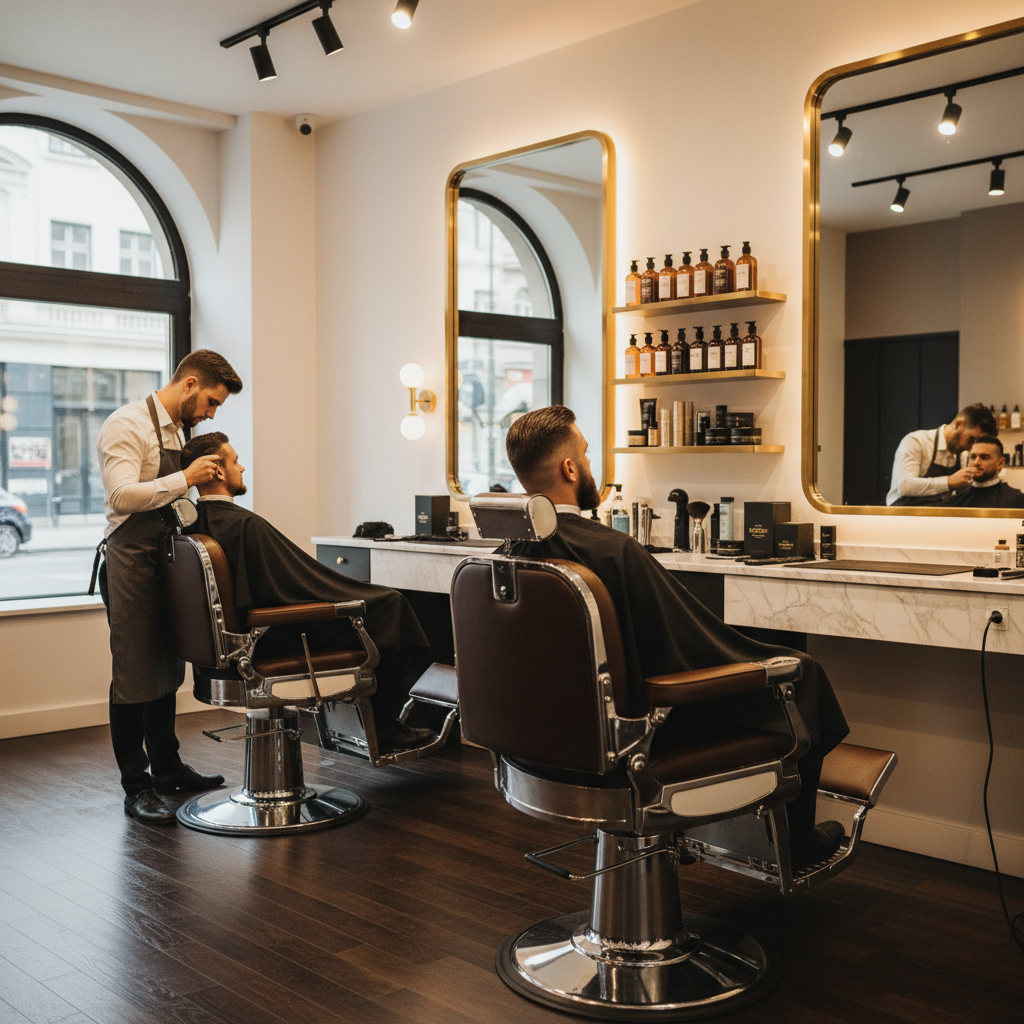
Quality lighting is crucial for the precision of the barber's work, but also for the visual rendering of photos that clients will share on social media. Well-placed ring lights or directional spots enhance the fade and the sharpness of the outlines, acting as free advertising for your talent.
3. Digitalization at the Service of Profitability
Managing a modern establishment can no longer rely on a paper diary. Automating administrative tasks allows the manager to focus on their core business: creation and customer relations. Optimized management involves a barbershop management solution that helps reduce no-shows.
Cashless Payment and Digital Tipping
With the gradual disappearance of cash, integrated payment solutions facilitate transactions. Furthermore, systems allowing for tipping directly on the credit card terminal significantly increase employee income (by an average of 15%), which improves talent retention within your team. A modern barber shop software is essential for tracking these metrics.
4. Retail Sales: The Forgotten Growth Lever
In a high-performing barbershop, product sales should represent between 15 and 20% of total revenue. However, many professionals still hesitate to "sell." The approach should be that of a medical prescription: you are the expert, the client has a need (dry beard, dandruff, irritated scalp).
How to Structure Your Product Offering?
5. Recruitment and Talent Management
The sector suffers from a shortage of qualified labor. Attracting the best barbers requires more than a good salary. It’s about offering a stimulating work environment, continuous training opportunities, and a strong company culture.
Conclusion and Outlook
The future of the barbershop lies in the ability of professionals to transform a technical act into an accessible luxury service. Personalization, product quality, and the adoption of high-performance digital tools are the three pillars of success. Discovering adapted solutions can make all the difference in your daily management.
Ready to transform your business?
Discover how Madyis can help you grow your business.
Discover Madyis