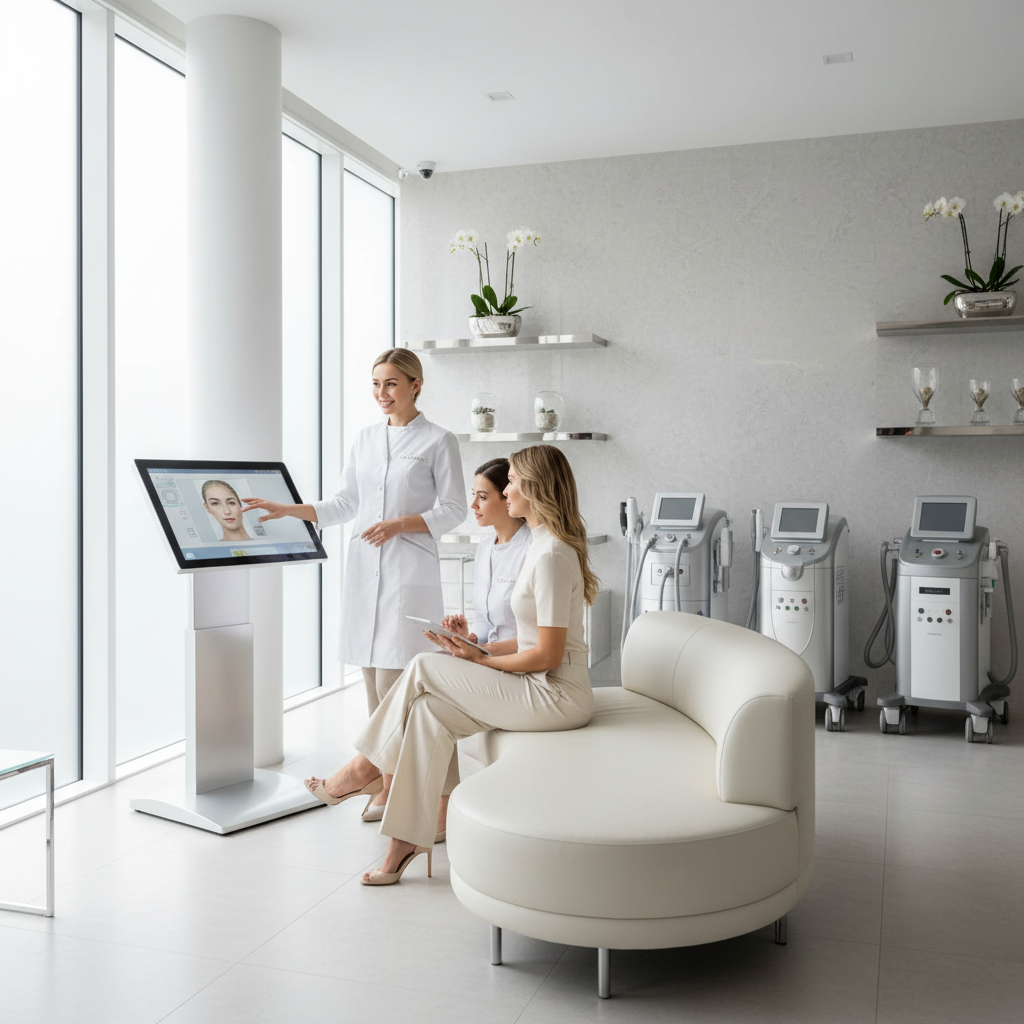
Managing an Aesthetic Clinic: The Ultimate Business Guide

Mastering Aesthetic Clinic Management for Sustainable Growth
The medical aesthetics industry is booming. According to IMCAS, the global market is expected to grow by 8-10% annually through 2027. However, this expansion brings increased management complexity. Managing an aesthetic clinic is no longer just about providing excellent care; it is now a balancing act between medical compliance, digital marketing, and operational optimization.
1. Operational Structuring: The Foundation of Success
The first mistake many practitioners make is viewing their clinic as a simple medical office. An aesthetic clinic is a hybrid business. Success starts with clear workflows. Every minute in a treatment room must be optimized.
Patient Journey Optimization
The patient journey begins long before they enter the clinic. It starts on Google or Instagram. Effective management requires immediate responses to inquiries. Internally, the organization of the reception and waiting time is crucial. Studies show that 65% of patients judge a clinic's quality based on administrative organization before even meeting the doctor.
Inventory and Supply Management
Injectables, post-procedure skincare, and consumables represent a major expense (roughly 20-30% of revenue). Rigorous business management requires real-time inventory. Overstocking ties up cash, while stockouts lead to immediate revenue loss.
2. Financial Steering and Key Performance Indicators (KPIs)
To ensure long-term viability, clinic owners must master their numbers. It’s not enough to look at total revenue; you must analyze profitability per treatment type.
Customer Acquisition Cost (CAC) vs. Lifetime Value (LTV)
In aesthetics, acquiring a new client is expensive (ads, social media, booking platforms). The goal is to maximize LTV. If your CAC is $100 for a Botox injection that yields a $50 net margin, you lose money on the first visit. Profitability comes from loyalty and cross-selling.
Margin per Room and Practitioner
Every square foot of the clinic must be profitable. Calculate revenue generated per hour per room. Some laser treatments, despite high revenue, may be less profitable than facials once machine depreciation and maintenance are factored in.
3. Marketing Strategy in the Digital Age
Aesthetic marketing is now driven by imagery and social proof. However, medical ethics regulations often limit direct advertising.
Content Marketing and Education
Instead of selling a price, sell expertise. Educational content (videos on post-op care, explanations of radiofrequency technology) builds essential trust. An educated patient is a patient who converts more easily.
Online Reputation
Google reviews are the new word-of-mouth. A clinic that doesn't actively manage its e-reputation loses 40% of its conversion potential. It is essential to integrate solutions like a client booking app that facilitates post-treatment review collection.
4. Team Management and Culture of Excellence
Staff is the primary driver of customer satisfaction. In an aesthetic clinic, the synergy between doctors, nurses, and receptionists is fundamental.
Continuous Training and Motivation
Investing in technical training is a prerequisite, but training in soft skills (reception, consultative selling, conflict management) is what sets a premium clinic apart. Good team management involves fluid communication and clear goals based on service quality.
5. Conclusion: Towards Aesthetic Management 2.0
Succeeding in aesthetics today requires dual expertise: medical and entrepreneurial. By optimizing every aspect from finance to management, you transform a simple practice into a flourishing business. Discovering adapted solutions can help centralize these complex challenges and allow you to focus on what matters most: patient satisfaction.
Ready to transform your business?
Discover how Madyis can help you grow your business.
Discover Madyis