
Practical Tips for Managing a Successful Beauty Salon in 2024
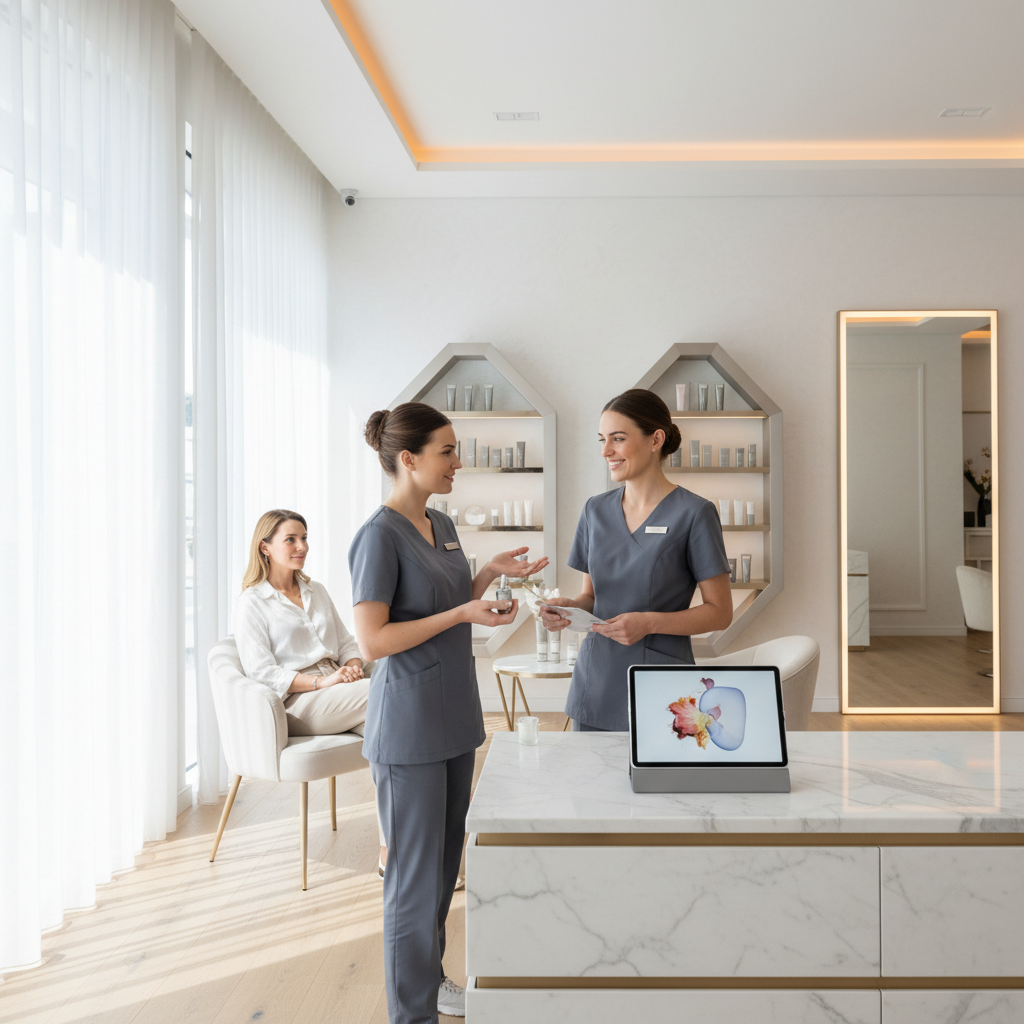
Practical Tips to Lead Your Beauty Business to Success
The beauty and wellness industry is undergoing an unprecedented transformation. In 2023, the global cosmetics and skincare market grew by over 8%, but this growth comes with increased consumer expectations. Today, having technical expertise is no longer enough. To sustain a salon or spa, the manager must take on the role of a true business leader, mastering digital marketing, financial management, and omni-channel customer experience.
According to recent industry studies, nearly 40% of salon appointments are now booked outside of opening hours. This data highlights the importance of adapting operational processes to new consumption patterns. In this comprehensive guide, we explore the fundamental pillars for transforming your structure into a high-performance establishment.
1. Optimizing the Customer Experience: Beyond the Treatment
The customer experience starts long before the individual walks through your door. It begins on Google, Instagram, or through digital word-of-mouth. A seamless journey is the primary lever for loyalty. A frictionless path is one that converts.
Personalization as a Standard
In a saturated market, personalization is your best asset. Clients are no longer just looking for a massage or a haircut; they are looking for recognition of their specific needs. Using a qualified database allows you to note preferences (favorite drink, cabin temperature, allergies, previously purchased products). A client who feels recognized is a client who returns.
Atmosphere and Sensory Design
Sensory marketing plays a crucial role. Smell is directly linked to the limbic system, responsible for emotions. Choosing a signature scent for your establishment can increase the perceived value of the service. Similarly, acoustics must be carefully considered: soft but not intrusive music, and above all, impeccable soundproofing between treatment rooms and the reception area.
2. Retention Strategies and Active Loyalty
It costs five times more to acquire a new customer than to retain an existing one. Yet, many managers focus their efforts on acquisition. To reverse this trend, it is necessary to implement intelligent loyalty programs.
Moving from Points Programs to Memberships
Subscription models, inspired by the tech and fitness sectors, are making a strong entry into the beauty world. Offering a monthly fee for recurring services (waxing, manicures) ensures stable cash flow and creates a consumption habit. This transforms a one-off transaction into a long-term relationship.
Post-Service Follow-up
A simple personalized SMS or email 48 hours after a treatment to ask for the client's feedback or give home care advice strengthens the bond of trust. This is also the perfect time to offer a client booking app to facilitate their next slot before they even have to think about it.
3. Financial Management and Service Profitability
The profitability of a beauty salon is not measured by overall turnover, but by the margin per cabin and per employee. It is imperative to analyze your fixed and variable costs for each service.
Calculating Cost per Minute
Every minute spent in your establishment has a cost: rent, electricity, salaries, insurance. By dividing your fixed costs by the number of opening hours, you get a cost per minute. If your "Express Facial" service is sold for €40 for 30 minutes of work, but your operating cost is €1.20/minute, your margin is extremely low after deducting the products used.
Increasing Average Basket Value through Upselling
Upselling should not be perceived as aggressive but as expert advice. If a client comes in for coloring, suggesting a protective treatment is a professional necessity. Training your team in retail product recommendation is essential: retail should represent between 15% and 25% of your total turnover to ensure healthy profitability.
4. Management and Leadership in Care Environments
Staff turnover in the beauty trades is among the highest in the service sector. Your business's success depends on the stability and motivation of your employees. A fulfilled employee will transmit this positive energy to clients.
A Culture of Objectives and Rewards
Don't leave your employees in the dark. Set clear goals: number of new clients, retail rate, or occupancy rate. Effective staff management involves transparency in figures. Organize weekly check-ins to celebrate successes and identify training needs.
Continuous Training: An Investment, Not an Expense
Beauty techniques evolve rapidly (microneedling, new highlights, lymphatic drainage). Offering regular training to your team allows you to stay competitive, justify higher rates, and above all, value your employees who feel invested in their careers.
5. Digital Transformation: The Competitive Edge
In 2024, a business that is not digitized is an invisible business. Digitalization is not limited to having a Facebook page; it concerns the entire operational management.
Local SEO and E-Reputation
90% of consumers read Google reviews before choosing a local business. Encourage your most satisfied customers to leave a review. Respond to all reviews, even negative ones, with professionalism and empathy. A well-managed negative review can strengthen your credibility more than a positive review with no response.
Automating Administrative Tasks
Time spent on the phone taking appointments or manually counting stock is time lost for business development. Modern tools allow for automated SMS appointment reminders, reducing no-shows by nearly 75%. This also frees up time for the physical welcome, which must remain the warm heart of your profession.
6. Data Analysis and Strategic Steering
You can only manage what you measure. The most successful salon managers consult their key performance indicators (KPIs) daily.
Key Indicators to Monitor
Analyzing this data allows for decisions based on facts rather than intuition. If you notice that Tuesday morning is consistently slow, it's time to launch a flash offer or a collaboration with a local business.
7. Preparing for the Future: Trends and Sustainability
Clean Beauty and eco-responsibility are no longer options. Clients question the origin of products, animal testing, and the environmental impact of packaging. Adopting a sustainable approach (waste sorting, water savers on shampoo stations, natural products) is a powerful marketing argument that attracts a premium and conscious clientele.
In conclusion, managing a beauty establishment today requires extreme versatility. Between technical mastery, client psychology, accounting rigor, and digital agility, the challenge is significant, but growth opportunities are real for those who dare to modernize their practices. To support this evolution, it is often wise to discover adapted solutions that simplify daily administrative tasks and put the human element back at the center of the institute.
Ready to transform your business?
Discover how Madyis can help you grow your business.
Discover Madyis